Military C4/ISR
Secure, long-range links for command, intelligence, surveillance & reconnaissance; HD full-motion video backhaul from tactical UAVs.
High-capacity, secure, and resilient Beyond-Line-of-Sight (BLOS) communications using tropospheric scattering—built for strategic and tactical links where fiber or satellite are unavailable or denied.
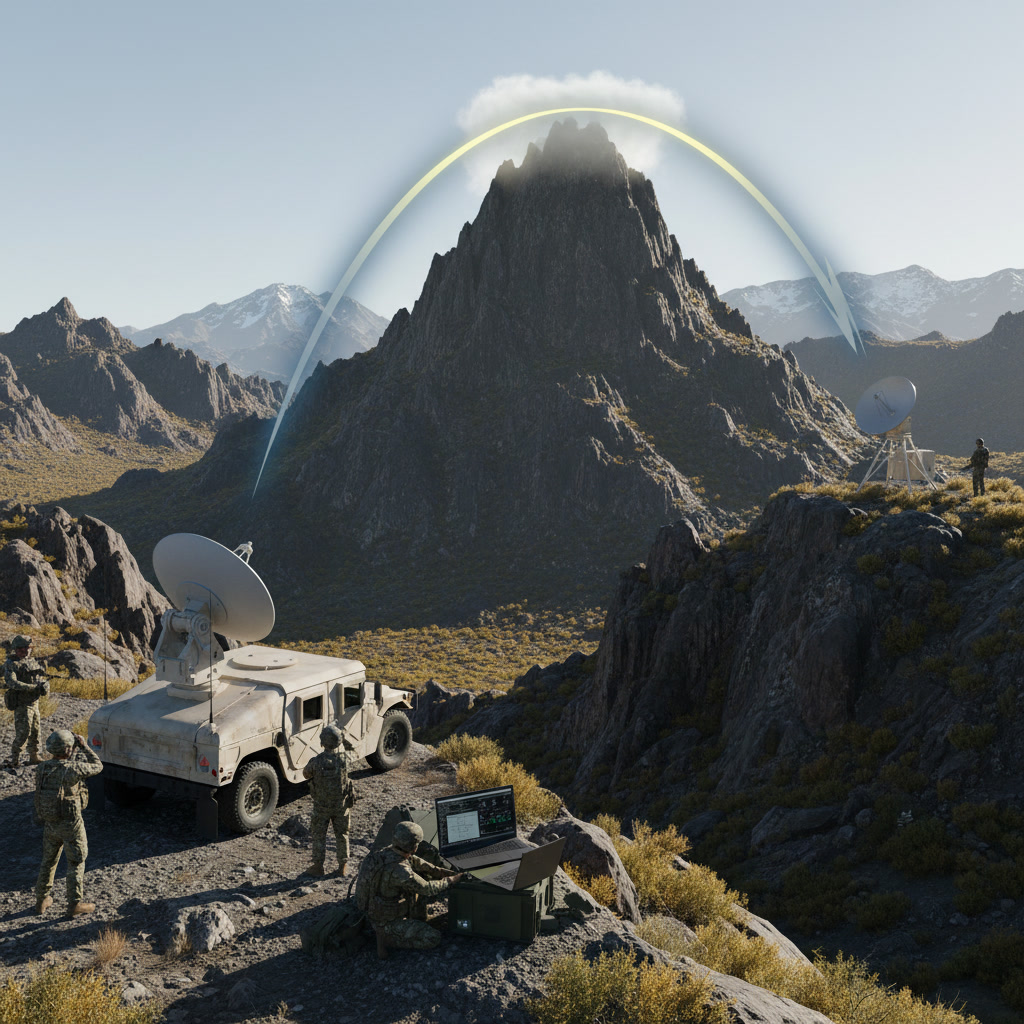
Troposcatter uses particles and irregularities in the lower atmosphere (troposphere) as a reflector for microwave signals, enabling long-range BLOS connectivity without relying on satellites. Typical figures: ≈500 km, ≈5–30 ms latency, ≈150 Mbps per direction.
It is ideal for remote geographies, contested environments, and mission-critical applications demanding sovereignty and resilience.
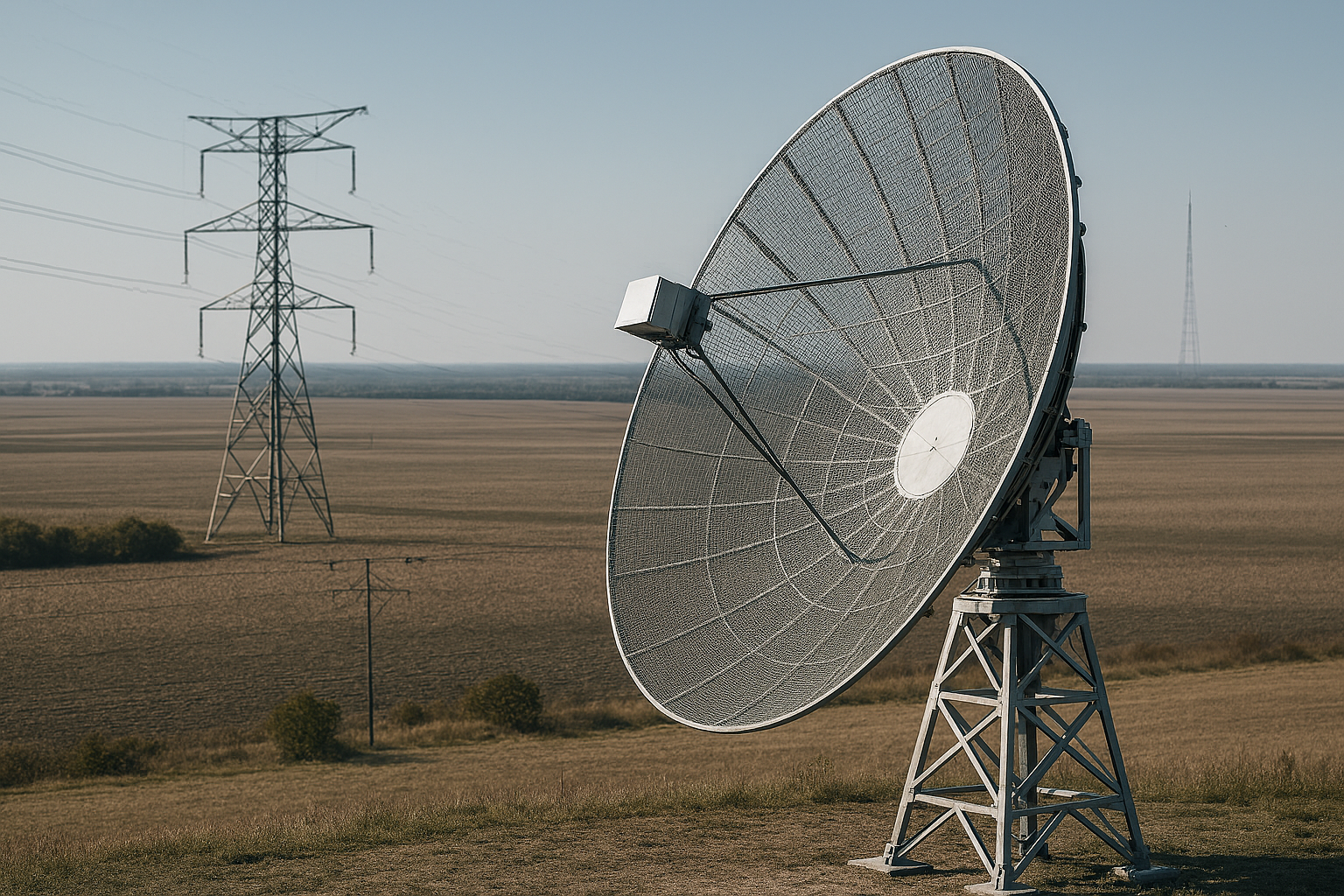
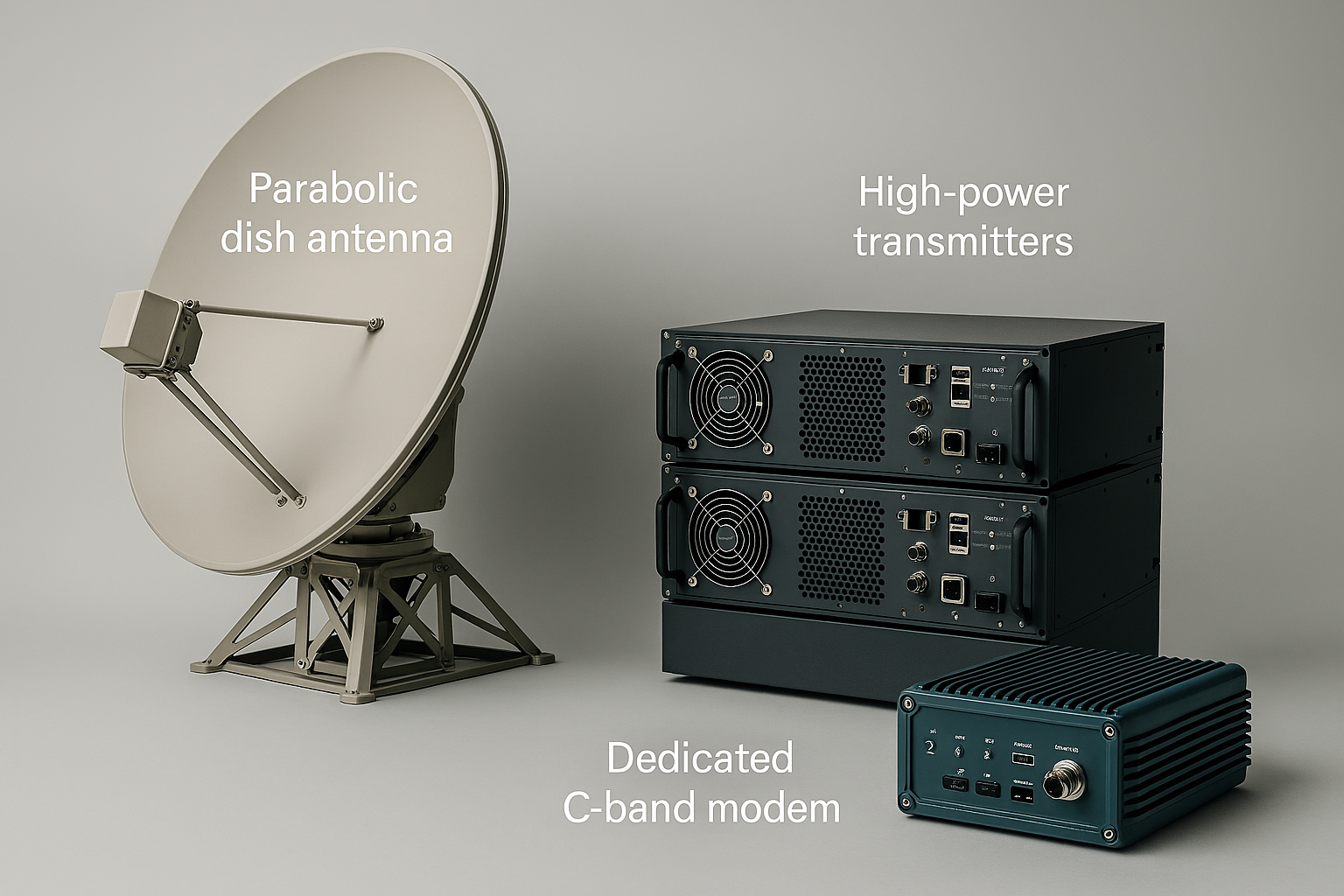
Modern tropo systems pair parabolic dishes, high-power transmitters, tropo modems and operate on dedicated C-band allocations—packaged in rugged platforms for rapid deployment.
Center-fed, high-gain reflectors with excellent sidelobe control.
Optimized RF chain for efficiency and robust link budgets.
Compact, feature-rich modems with advanced control & monitoring.
Dedicated regional allocations for reliable tropo operations.
Tropo links are resilient to jamming, reduce susceptibility to cyber-attack, offer lower latency than SATCOM, and enable distributed architectures for adaptive routing.
Atmospheric scatter makes wide-area jamming impractical.
Smaller attack surface vs. broad satellite beams.
≈5–30 ms typical round-trip.
Flexible multi-hop relays and adaptive backbones.
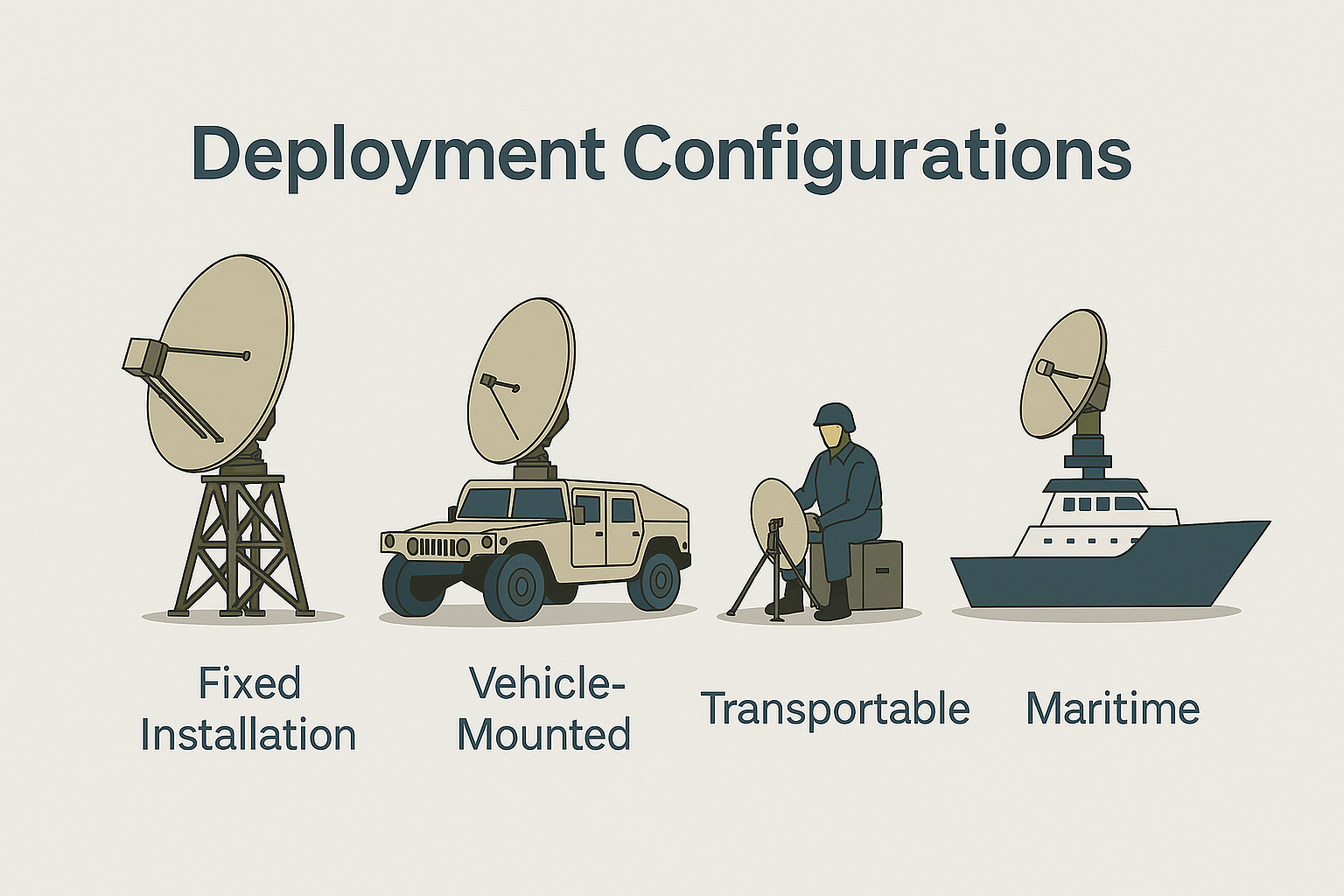
Fixed hub sites, expeditionary kits, and mobile/vehicular installations—each engineered for rapid setup and rugged operation.
Point-to-point trunks connecting bases and critical infrastructure with high availability.
Tool-less, motorized assembly; rapid link establishment for field operations.
Convoy/backbone communications in austere terrain and contested spectrum.
Connectivity for defense, civil protection, and industrial operations.
Secure, long-range links for command, intelligence, surveillance & reconnaissance; HD full-motion video backhaul from tactical UAVs.
Rapid emergency links; lower running costs than premium SATCOM during initial response.
Ship-to-shore / platform-to-shore backbones for operations and HSSE telemetry.
Reliable BLOS links across remote concessions for operations and safety.
Troposcatter typically uses C-band (≈4.4–5 GHz); national allocations guide permitted bands and licensing. Pegasus works with regulators to ensure lawful deployment.
We'll survey your sites, model link budgets, and plan a rapid pilot with resilient BLOS connectivity.