Spectrum Stewardship
Audit and govern national frequencies; detect unauthorized or harmful emissions.
Ground systems, spectrum monitoring, geolocation, and anti‑jamming capabilities for regulators, defense, satellite operators, and MNOs—plus tools to strengthen national Space Domain Awareness (SDA) across GSO and NGSO constellations.

Spectrum is a strategic national resource. SDA enables you to regulate usage, detect interference, safeguard infrastructure, and maintain continuity as LEO/MEO/GEO traffic grows.
Audit and govern national frequencies; detect unauthorized or harmful emissions.
Identify, localize, and resolve cross-border and in-band interference in near real-time.
Validate NGSO constellations against EPFD limits and geostationary arc protection.
Hardened ground systems, anti-jamming and lawful interception workflows.
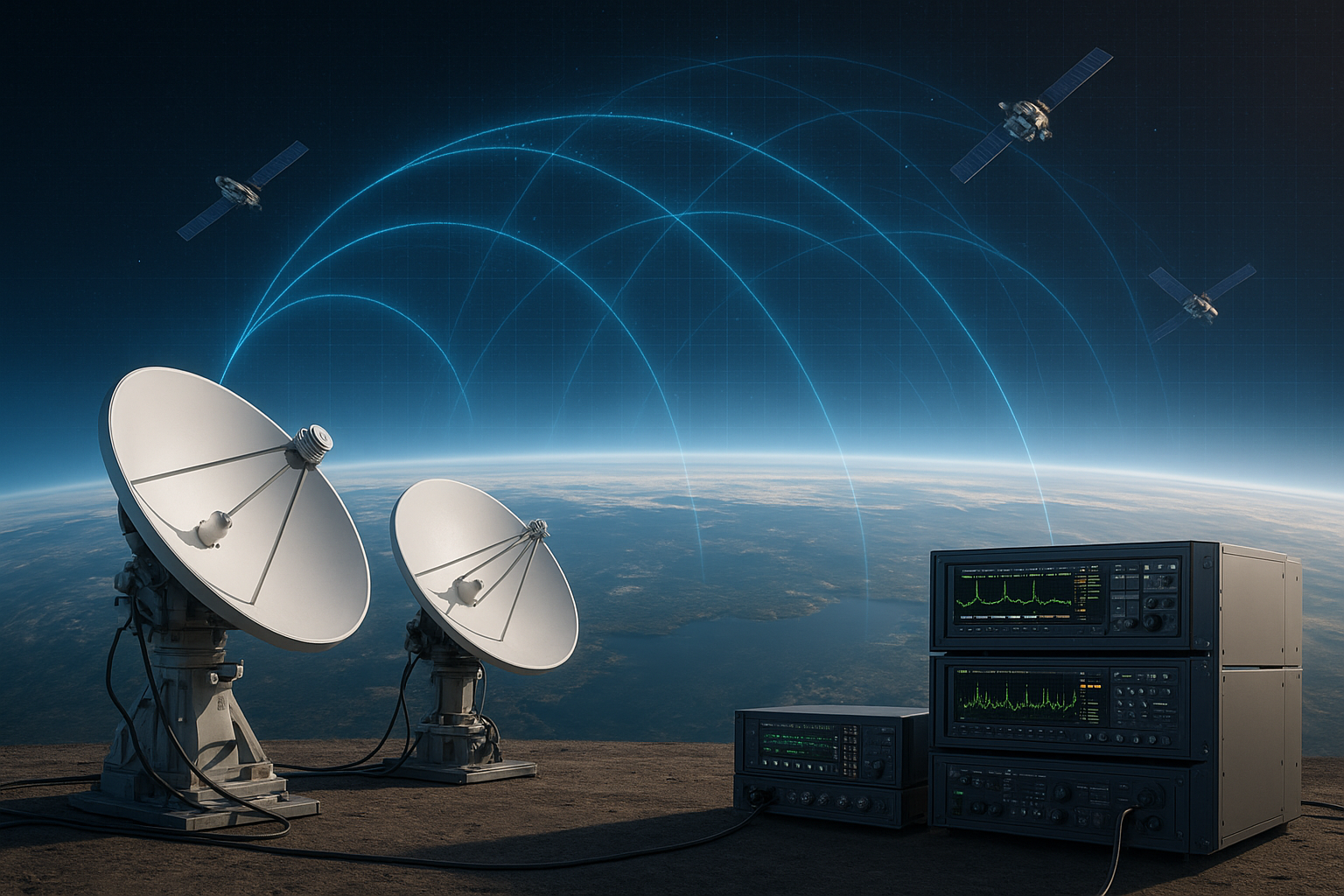
Scan Ku/Ka bands, classify channels, and track constellation activity across LEO/MEO/GEO. Detect unauthorized emissions, congestion, and harmful interference with continuous measurements and alerts.
Pinpoint uplink sources causing service degradation, then execute lawful intercept workflows when authorized—combining fixed sites with mobile units for rapid resolution.
Time-difference/correlation methods to resolve emitter position.
Archive up to wide IBWs for post-analysis, playback, and attribution.
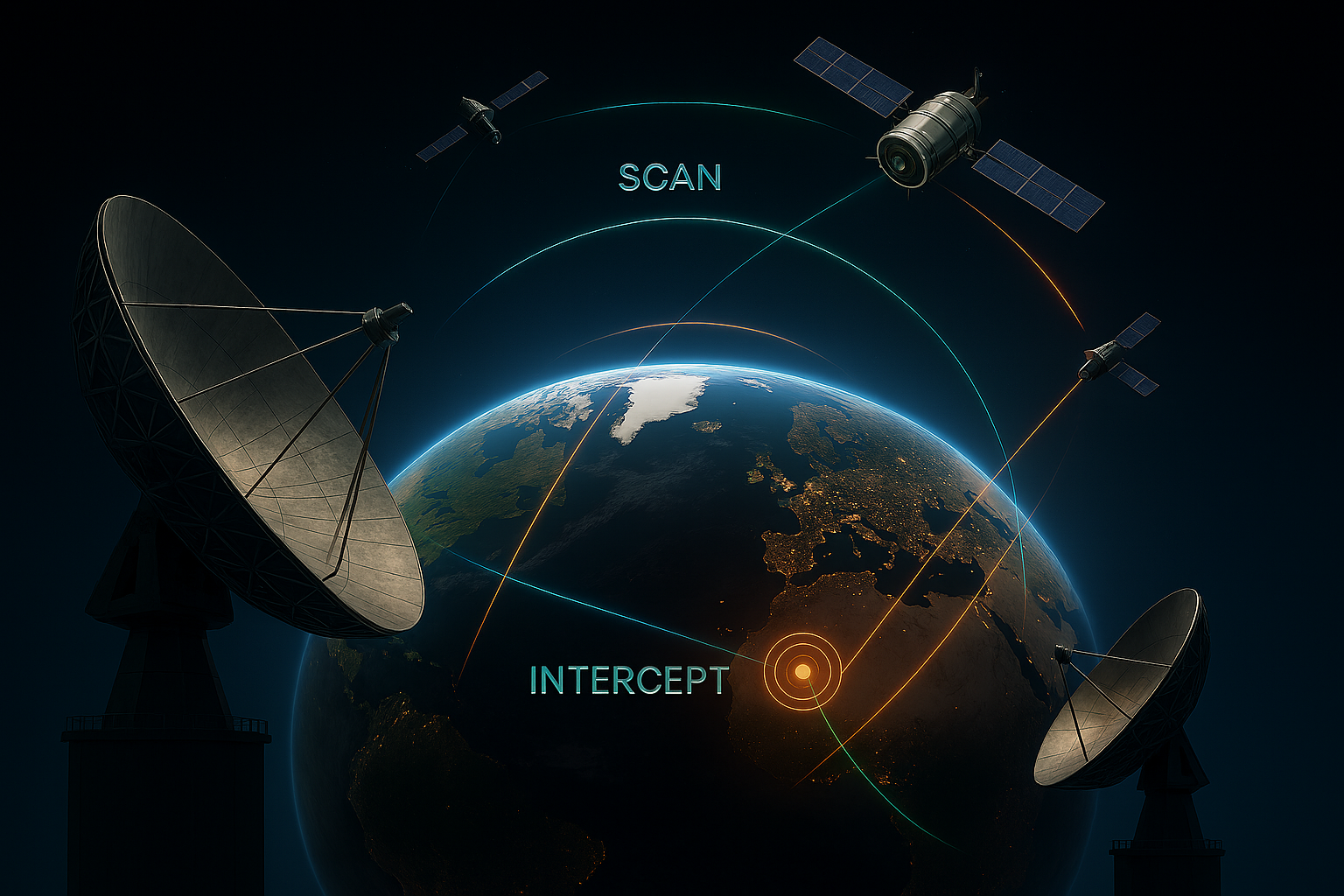

Electronically steerable antennas, fast digitizers, and edge compute perform local analysis and stream results to a central site—scaling nationwide and reducing backhaul.
Design, integrate, and maintain SATCOM ground infrastructure—uplink/downlink chains, spectrum monitoring shelters, and secure networks—hardened against jamming and spoofing.

Deploy individually or as a platform, with APIs to your C2/NOC: monitoring, geolocation, interception, analytics, and regulatory compliance.
Continuous GEO channel scanning, interference detection, and trend reports.
LEO/MEO beam activity maps, multi-satellite visibility, burst/channel analytics.
TDOA/correlation methods with fixed and mobile assets for emitter location.
Capture wide IBW, replay and analyze with 3rd-party tools for attribution.
EPFD checks, geo-arc blind scans, and compliance dashboards for authorities.
QoS, incident histories, and integrations to NOC/SIEM for faster resolution.
National regulators, defense & intelligence, satellite operators, and telcos/MNOs—each with specific modules and workflows.
Spectrum governance, EPFD validation, enforcement & reporting.
SDA picture, interference attribution, and lawful intercept support.
Beam monitoring, network protection, and incident resolution.
Backhaul assurance, cross-border interference tracking and QoS.
We'll assess needs (regulatory, defense, operator), map nodes, and propose a phased rollout—monitoring, geolocation, and resilience.